
Underside
Drips on Cold Mornings
Water falling evenly across the bay after a cold, clear night points to condensation forming on the cold underside of the steel panels.
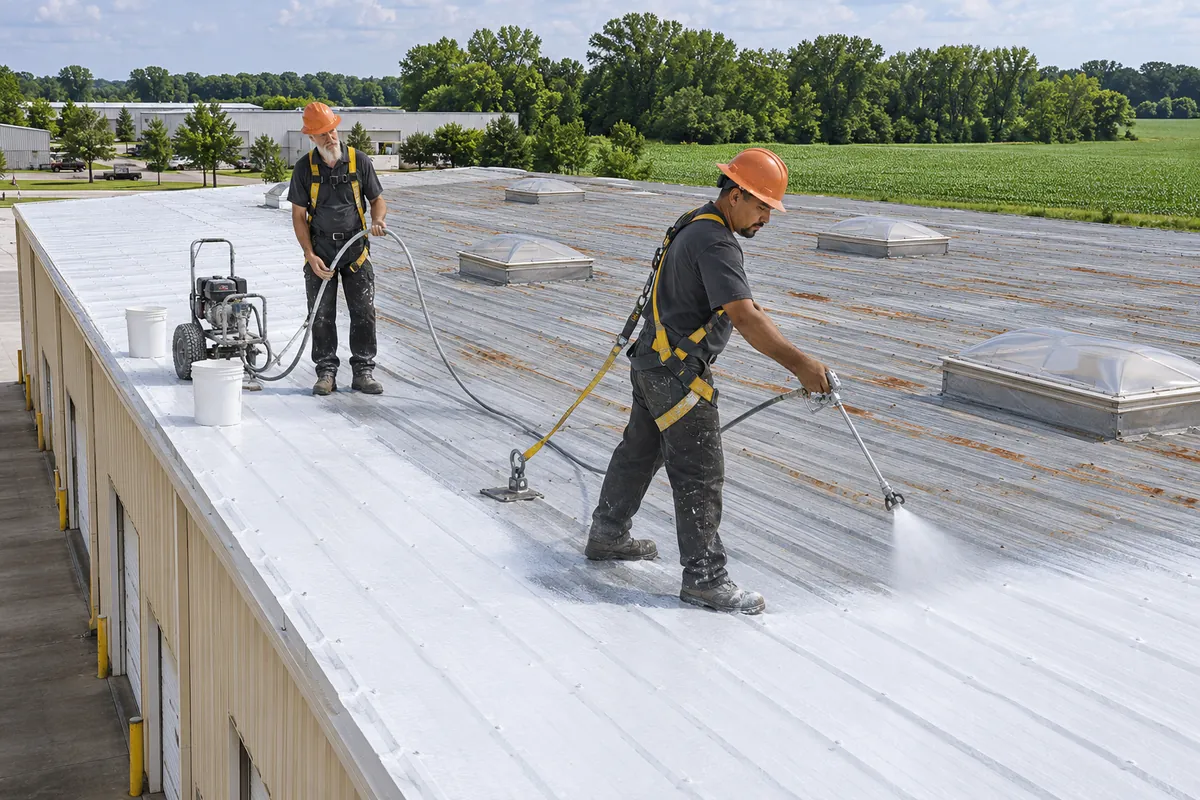
As a Linton metal roof coating contractor, we coat steel roofs on equipment buildings, storage sheds, and shops after sorting condensation from true leaks.
Linton metal roof coating calls often begin with water on the floor of an uninsulated building. On equipment and storage buildings in Greene County, that water can come from condensation on the underside of cold steel as easily as from a leak.
The two need different fixes. Condensation forms when warm, moist air meets cold panels, and a roof coating alone will not end it. Leaks follow screws, laps, and flashing, and those are exactly what a coating seals.
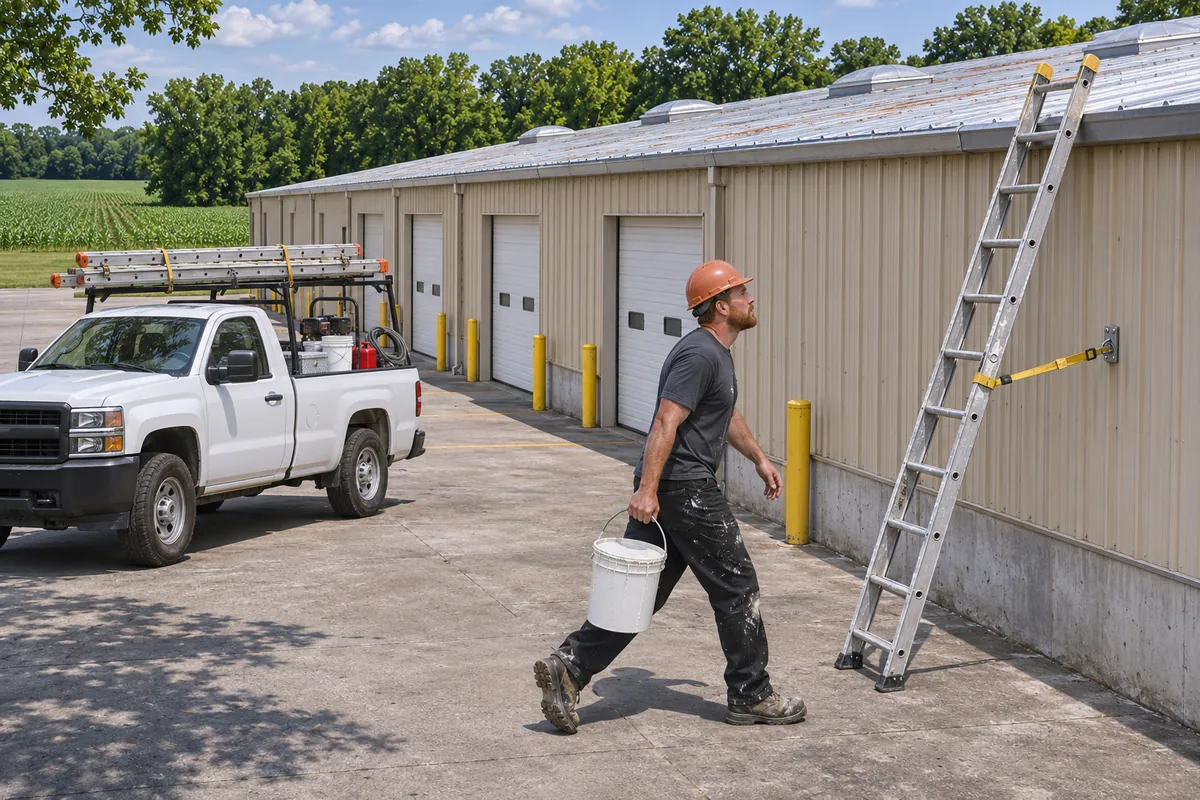
Farm-style and storage buildings around Linton show these four conditions most. Sorting them is the first step.
Water falling evenly across the bay after a cold, clear night points to condensation forming on the cold underside of the steel panels.
Drips that line up with purlins during rain mean washers have failed at the screws, which a coating seals.
Spring storms leave dents and cracked paint across open-country roofs, and bare steel in the dents starts to rust.
Ridge caps and roof vents on equipment buildings lose their closures, letting blown rain and birds inside.
Once leaks are sorted from condensation, a coating gives Linton building owners four clear gains, most of them visible by the first spring storm after the job.
Capped and resealed screws stop the drips that lined up with every purlin.
Primer and coating seal paint cracks in hail dents before rust spreads from them.
Tractors, trucks, and stored parts under the roof stop collecting water spots.
You know which water came from the roof and which came from moist air inside.
Five systems cover the metal and mixed roofs around Linton. Each card says where it fits on local buildings.
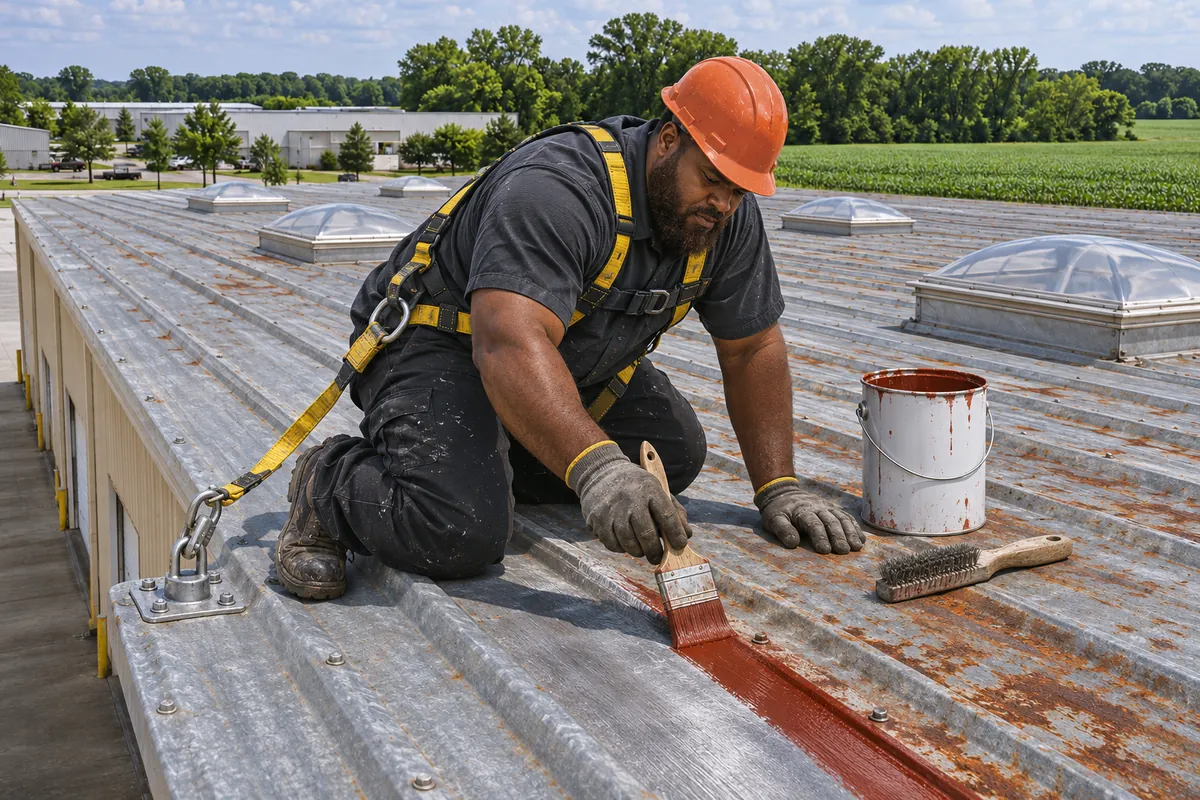
Ribbed steel on equipment buildings gets primer at hail-cracked paint, new screws, sealed laps, and two measured coats.
Metal roof coating in Linton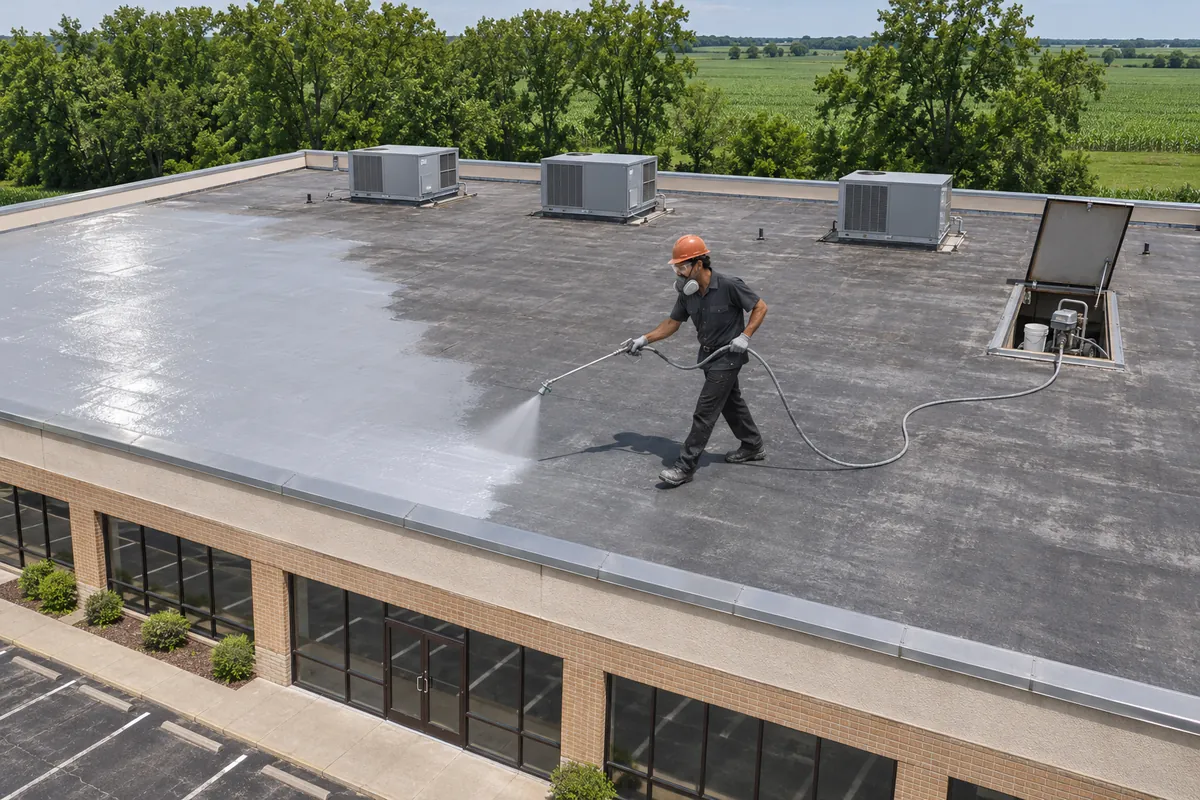
Low lean-to roofs added beside an equipment building often hold water, so silicone suits those flatter sections.
Silicone roof coating in Linton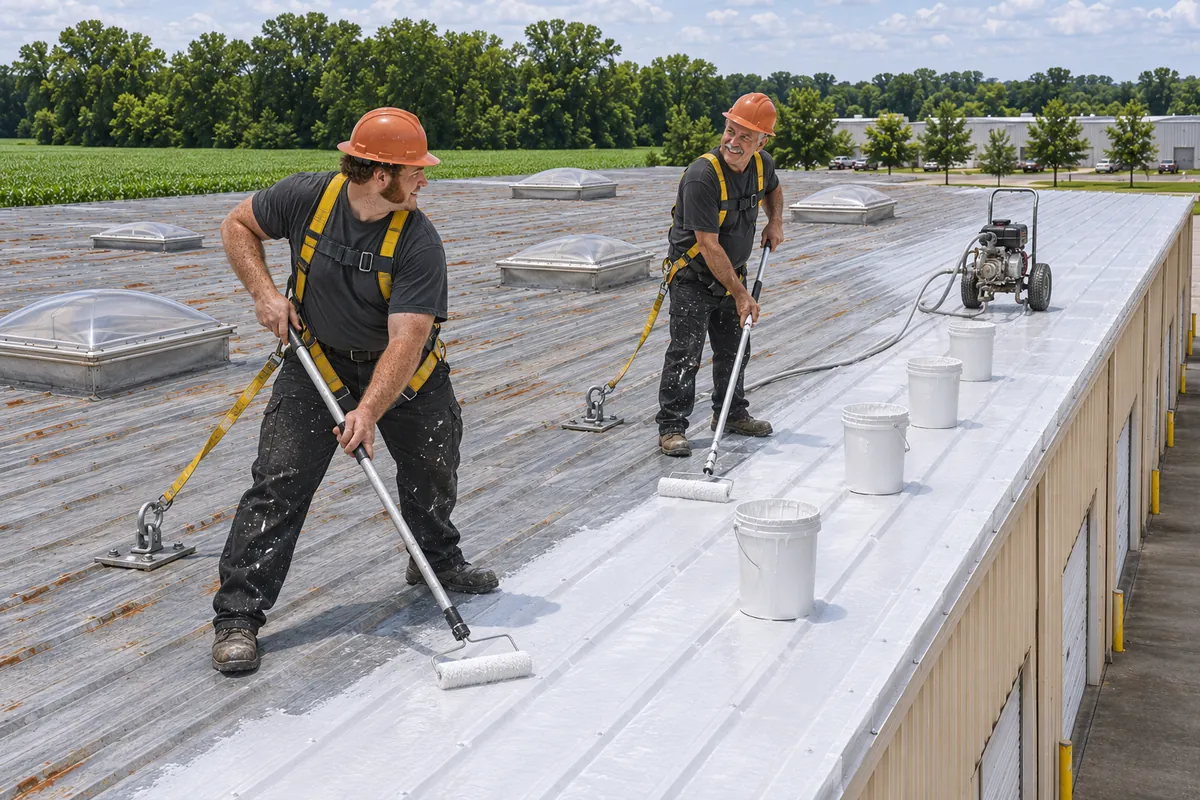
Steep storage roofs that dry fast after rain can take acrylic over primer at a lower material cost.
Acrylic roof coating in Linton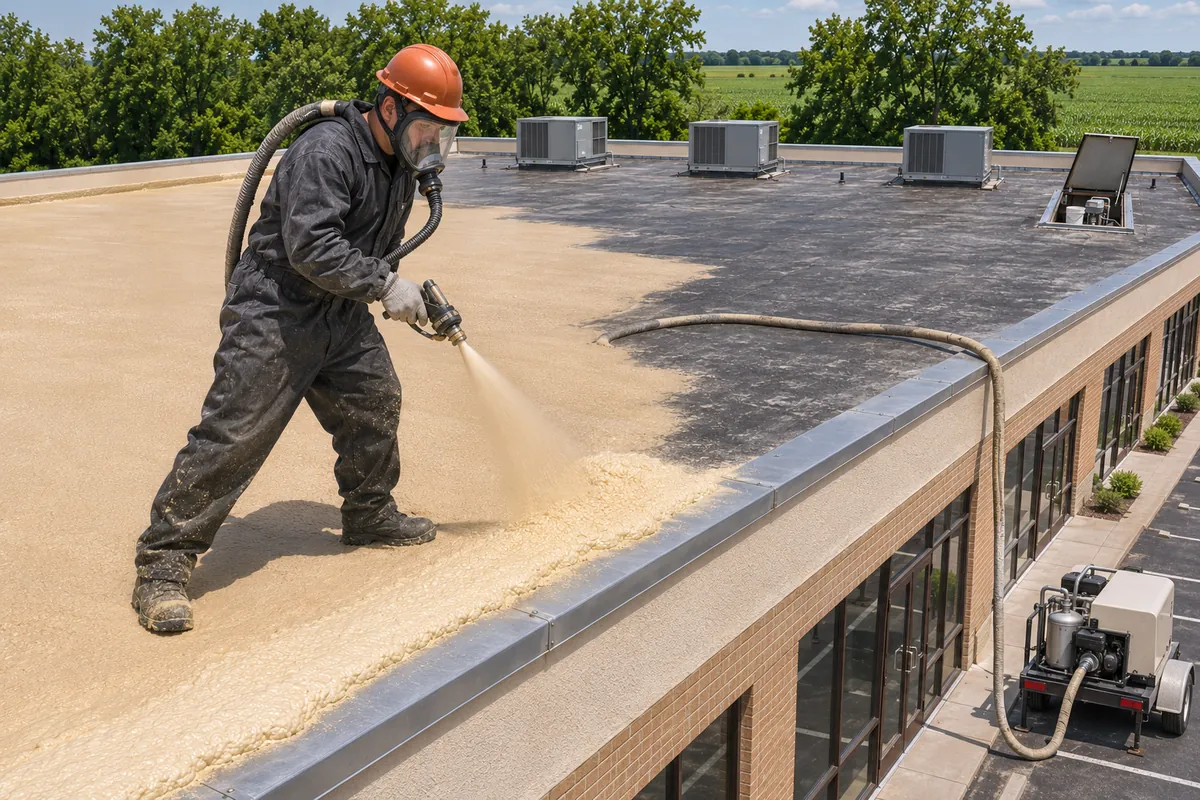
Uninsulated shops that sweat and leak benefit from spray foam, which adds insulation and seals laps in one layer.
Spray foam roofing in Linton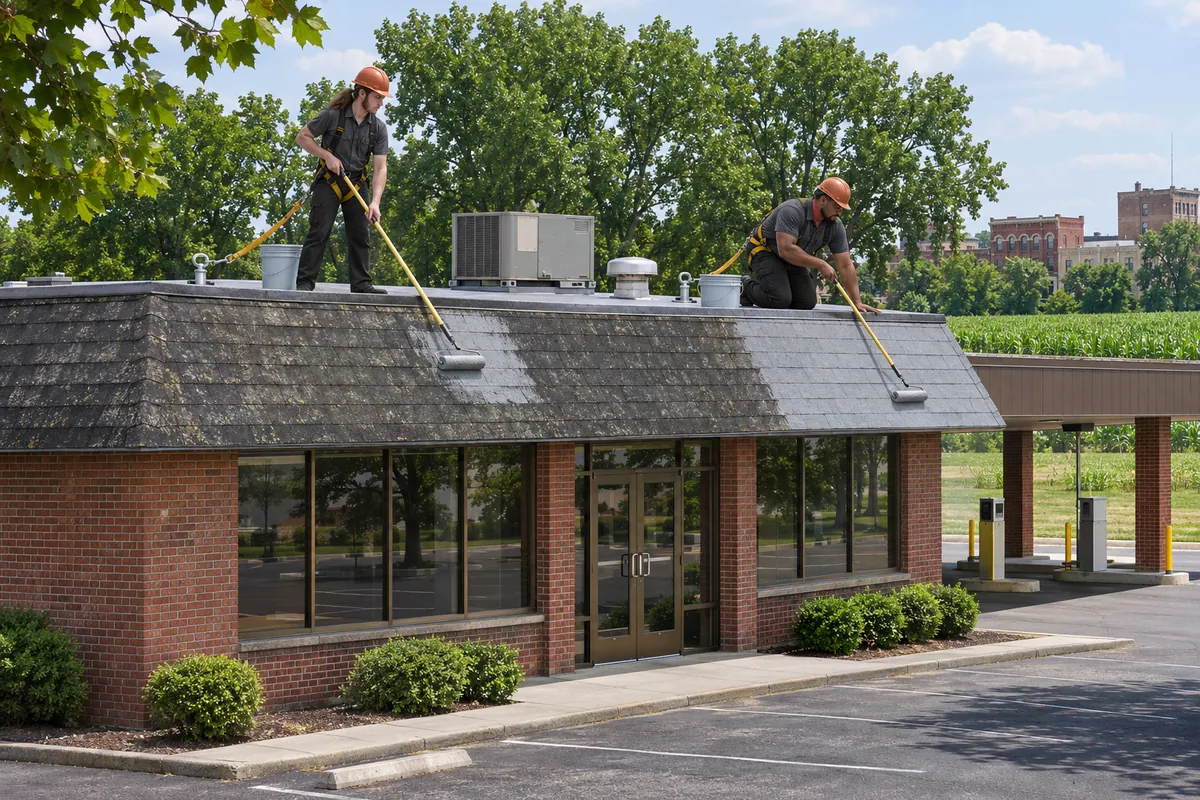
Office and church buildings in Linton with flat-lying shingles can be coated rather than reshingled for now.
Shingle roof coating in LintonThat might be condensation rather than a leak. Call us and describe the drips; we can help sort the two before anyone climbs up.
(930) 346-3203Finding the true source of water comes first. The rest follows the same order on every steel roof we coat.
We look at the drip pattern inside, then walk the roof to check screws, laps, ridge caps, and hail damage, with photos of each.
Drips that follow rain go on the leak list. Water that shows on cold, dry mornings goes on a condensation note with ventilation ideas.
Cracked paint in hail dents is brushed and primed, and ridge caps get new closures and screws.
Larger screws replace stripped ones, every head gets a cap, and laps get fabric set in mastic.
Two coats go on in dry weather, with thickness checked and logged. The condensation note stays with your copy of the scope.
These towns are in our area too, each with its own mix of shops, plants, and storage roofs. For a building elsewhere, call us or send us a message.
Skylight panels on shop roofs kept, swapped, or guarded.
Metal roof coating in BrazilRidge caps, rake trim, and closures refastened before coating.
Metal roof coating in ClintonNewer panels checked against the maker warranty terms.
Metal roof coating in PittsboroOld coatings and mastic tested for grip before recoating.
Metal roof coating in SullivanYes. We coat steel roofs on commercial and farm-style metal buildings in Linton. Rust, laps, and screws get checked first, then we recommend acrylic, silicone, or another system based on slope and drainage. Owners in nearby Greene County towns can call to ask about their location.
More metal roof coating answersHail can dent panels and bruise or puncture thinner coating films. After a storm we look for cracked coating, bare metal, and damaged screws, then clean and recoat small areas. Thicker systems or a urethane base coat resist impact better on roofs that see hail often.
Not by itself. Condensation forms under the roof when warm, moist air meets cold steel. Ventilation, insulation, or spray foam addresses that, while the coating seals leaks at screws and laps.
Check when the water appears. Drips during or right after rain, lined up with screws or laps, point to leaks. Water spread across the bay on cold, dry mornings points to condensation.
Yes. Coating happens on the roof surface, and nothing comes through the panels. We ask that doors near the spray area stay shut while the crew works overhead.
The calculator range runs about $2.50 to $4 per square foot of roof. Hail repairs, ridge cap work, screw counts, and the system chosen set where a building lands in that range.
Often, yes. Spray foam on the roof warms the steel from above, which reduces how often the underside reaches the temperature where moisture condenses. It also seals laps and screws, so it handles leaks and sweating in one system.
Call for a walk once the roof is safe. We photograph dents, cracked coating, and exposed steel with dates, clean and prime any bare spots, and recoat small areas so the next rain finds no openings.
Tell us when the water shows up and where it lands. We sort leaks from condensation and send a written scope for the roof.