
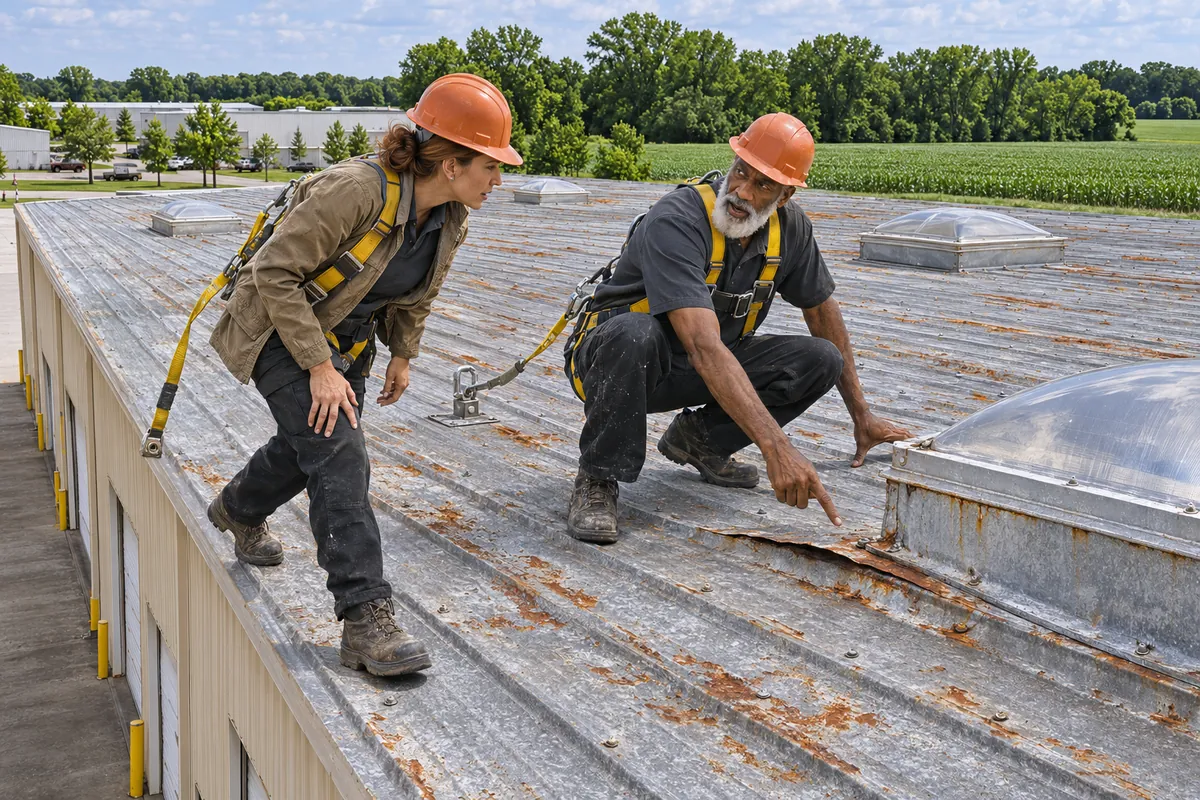
Foam Fits
- Leak Pattern
- Dozens of laps and screws
- Insulation
- Thin, with drafty bays below
- Substrate
- Dry, firm steel or old roof
- Site Around It
- Room to control overspray
- Our Call
- Spray foam, then topcoat
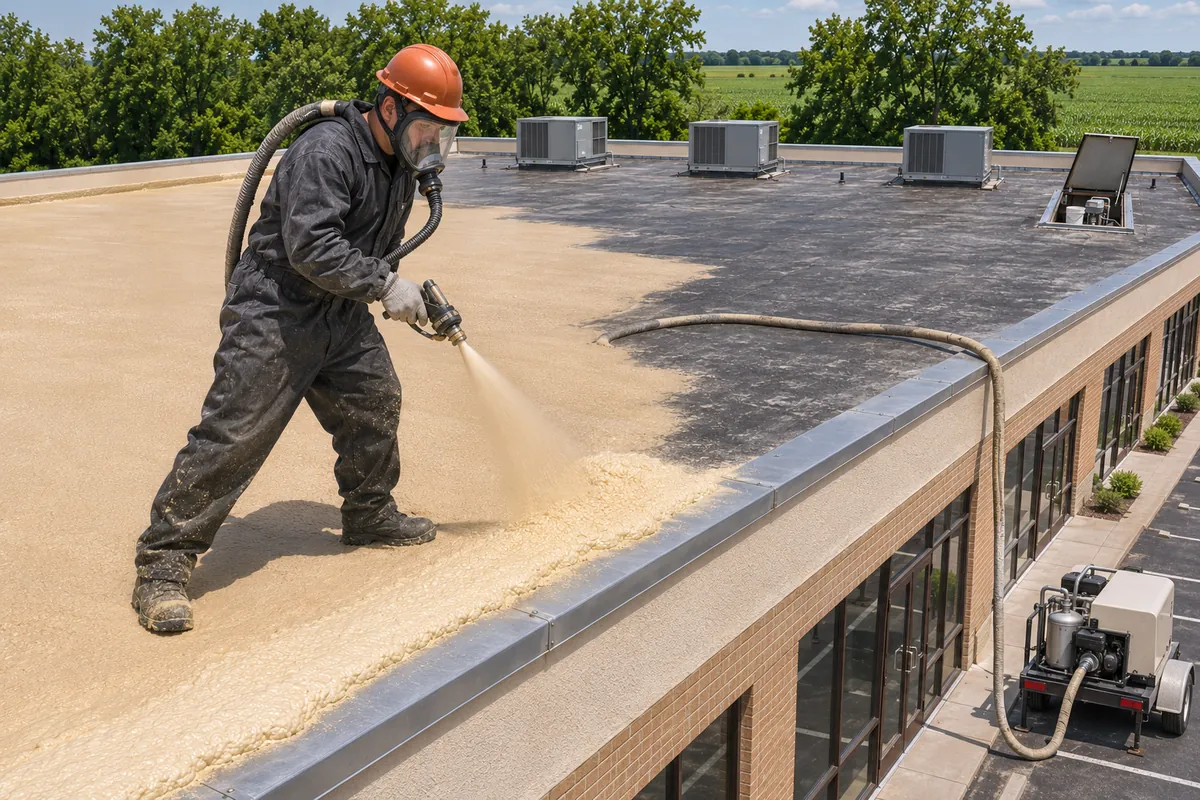
As a Terre Haute spray foam roofing contractor, we dry-check the deck, spray polyurethane foam to depth and slope, and seal it under a protective topcoat.
Terre Haute spray foam roofing pays off on roofs that leak at many laps and lose heat through the deck. Weigh both cards.
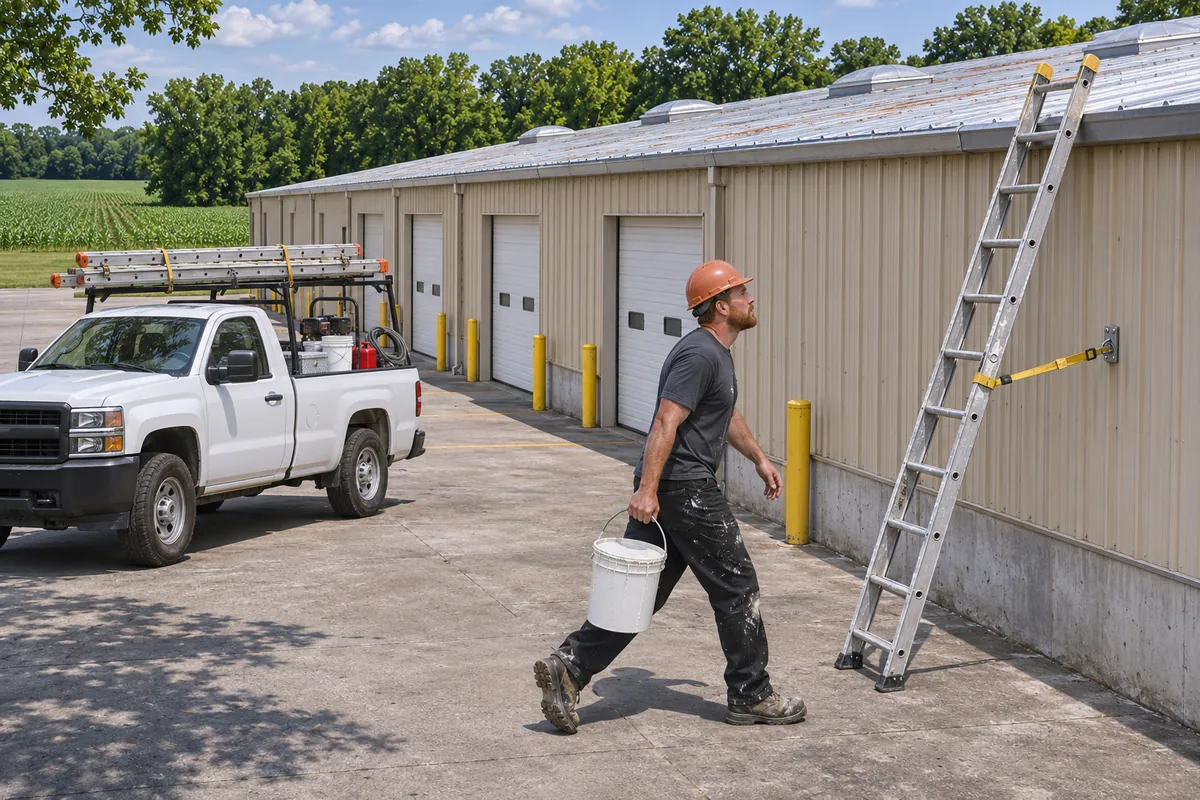
Foam only works over the right roof on the right day. These four checks decide whether we spray.
It can, by forming one continuous layer over laps and screws, but only over dry steel; wet insulation gets removed so foam never seals moisture in.
Foam mist travels on a breeze, so vehicles get moved, intakes covered, and spraying stops when gusts climb past the safe limit.
Uncoated foam yellows and erodes quickly, so the topcoat follows soon after spraying and is renewed before it wears through.
Punctures in the topcoat let water reach the foam; a yearly walk finds them while a dab of sealant still fixes them.
Foam is the heaviest system we install. Compare it with the four coating options before deciding which one your roof needs.
| System | Goes Over | Handles Ponding | Recoat With |
|---|---|---|---|
| Commercial Metal Roof Coating | Solid steel needing lap and screw sealing | Brief puddles only | Metal coating family |
| Silicone Roof Coating | Flat metal and older membranes | Rated for standing water | Silicone |
| Acrylic Roof Coating | Sloped panels that drain quickly | Avoid where water sits | Acrylic |
| Spray Foam Roofing | Steel, concrete, wood, or built-up roofs | Tapered to carry water to drains | New topcoat over cleaned foam |
| Shingle Roof Coating | Flat, attached shingles | Sheds water on slope | Shingle-grade coating |
Foam roofs bring four gains that a coating alone cannot match, which is why owners of drafty, leaky buildings ask for them.
Foam fills over every lap, screw, and flashing edge, leaving no joints for water to follow.
Each inch of foam adds insulating value, which shops and warehouses with heaters notice through a Terre Haute winter.
Added depth near low spots creates fall toward drains, turning ponding areas into draining ones.
Compared with a new roof assembly, foam weighs little, and the existing roof stays in place under it as the base.
Those two problems together point toward foam. Call us and we will check the deck for moisture and talk through depth and topcoat.
(930) 346-3203Foam is unforgiving of moisture and wind. These five steps keep both under control from the first core to the last topcoat pass.
Moisture readings and core cuts show what lies under the existing roof. Wet areas, loose panels, and soft decking get marked and photographed.
Soaked insulation and damaged sections are cut out and rebuilt flush so the foam goes on at an even depth over dry material.
The roof surface is cleaned and primed where needed. Vehicles are moved, intakes covered, and walls masked against drifting overspray.
Foam goes on in passes to the planned thickness, deeper at low spots to build slope. Depth is probed as the crew works across the roof.
Silicone or acrylic goes over the foam before sunlight can reach it, at the thickness its maker requires, then walk pads go on service routes.
Foam is one answer. These four coatings cover roofs where foam would be more than the building needs.
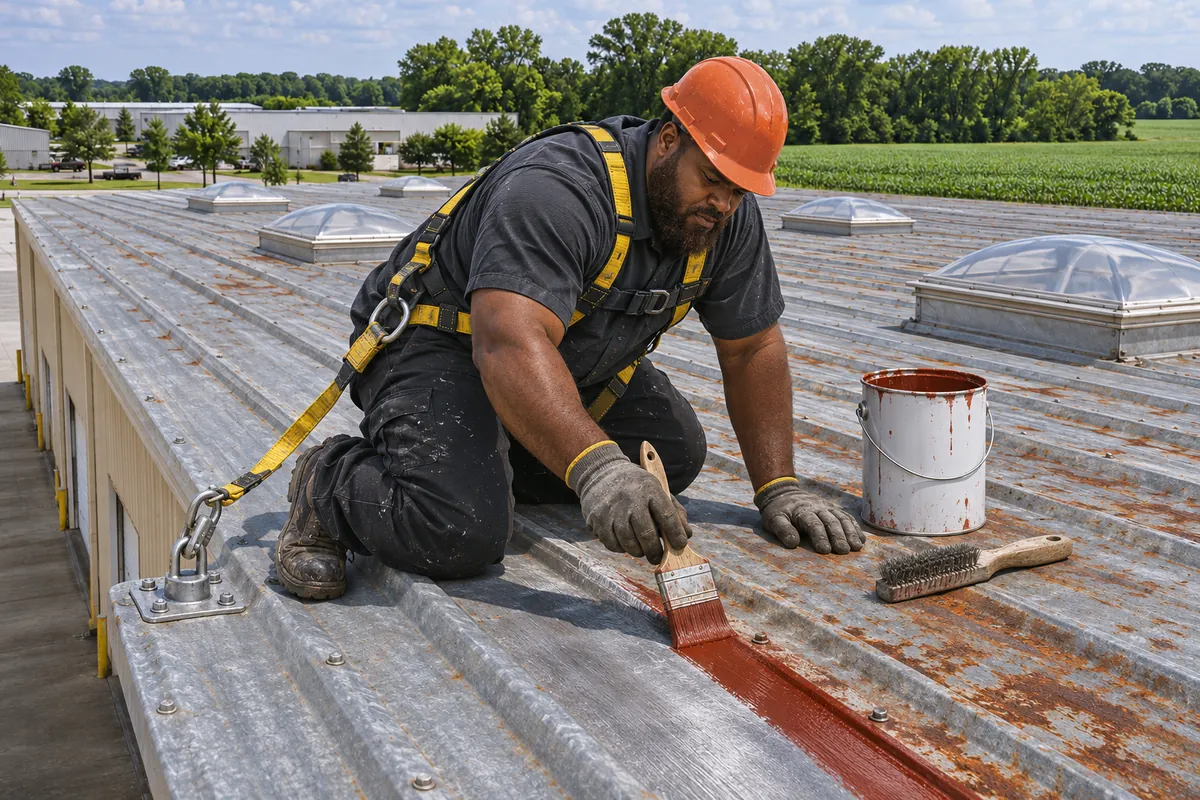
Steel that leaks at a handful of laps and screws but holds heat well gets the metal coating system at a lower cost than foam.
Metal roof coating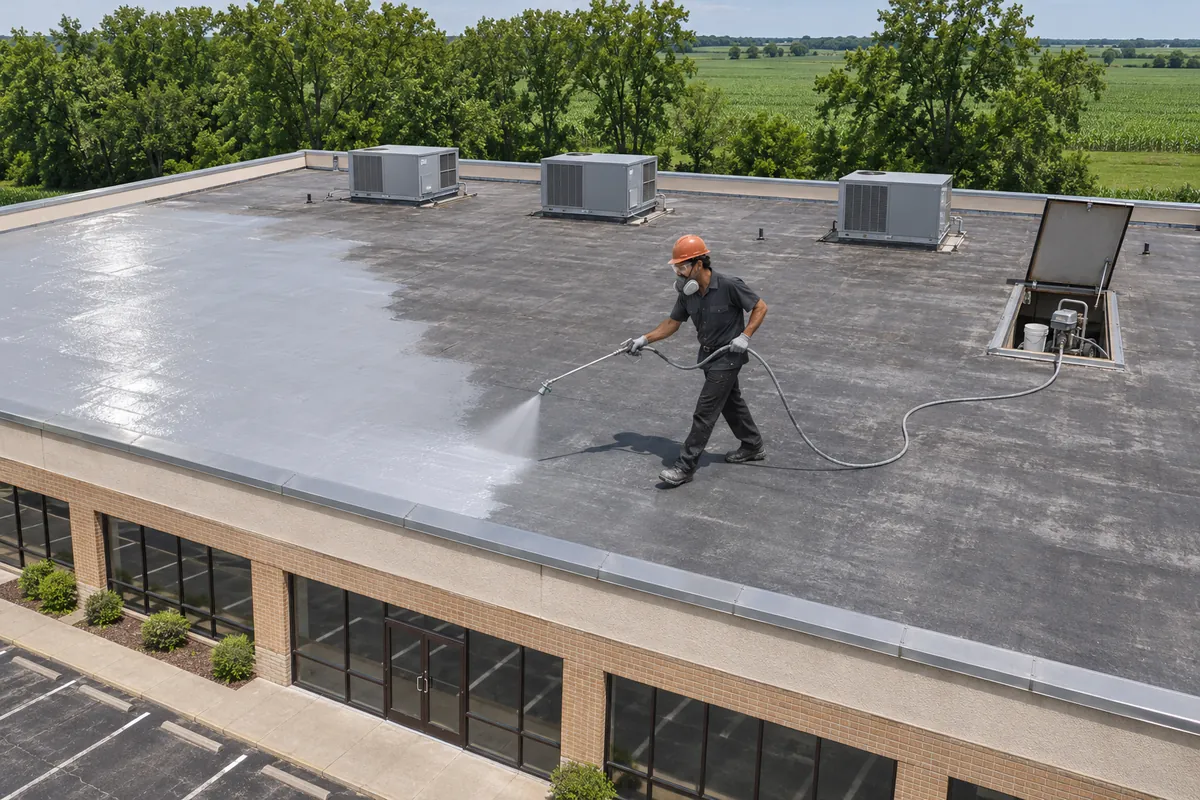
A flat roof with good insulation and some ponding can skip the foam and take silicone directly over a primed surface.
Silicone roof coating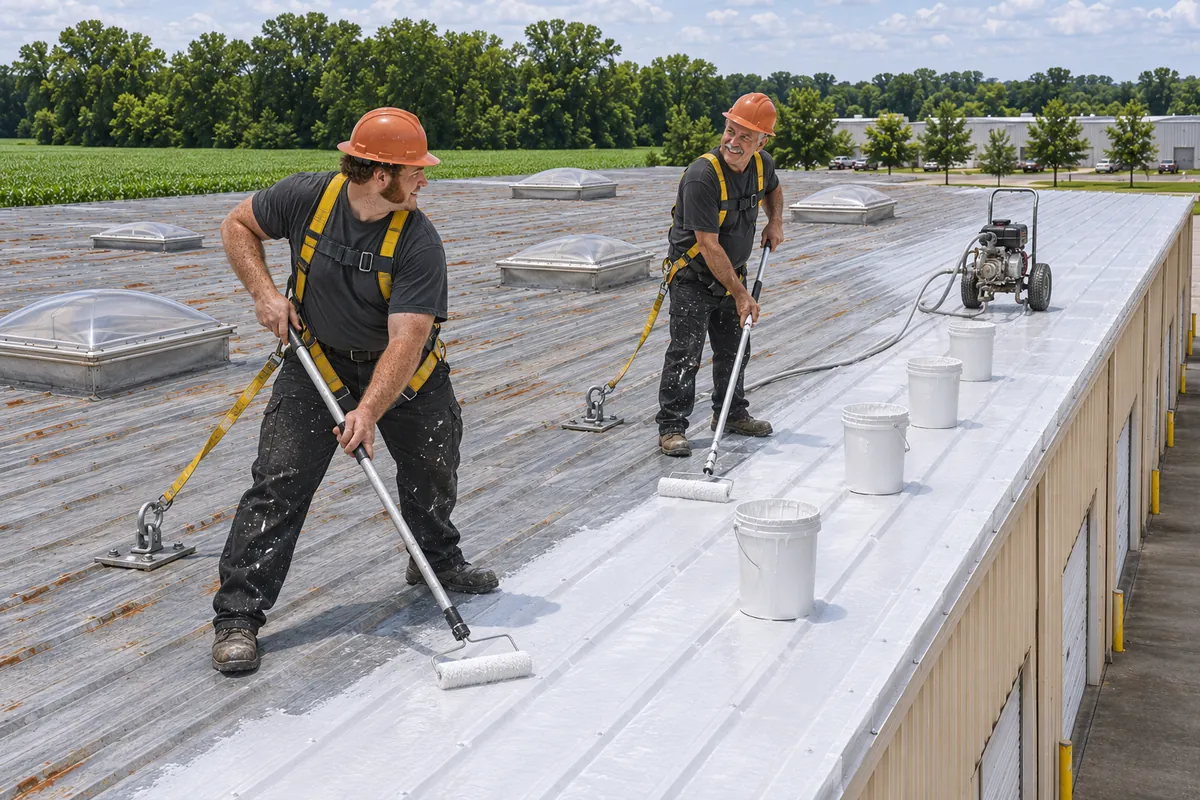
Sloped roofs with faded paint and dry, firm panels often need nothing heavier than primer and two acrylic coats.
Acrylic roof coating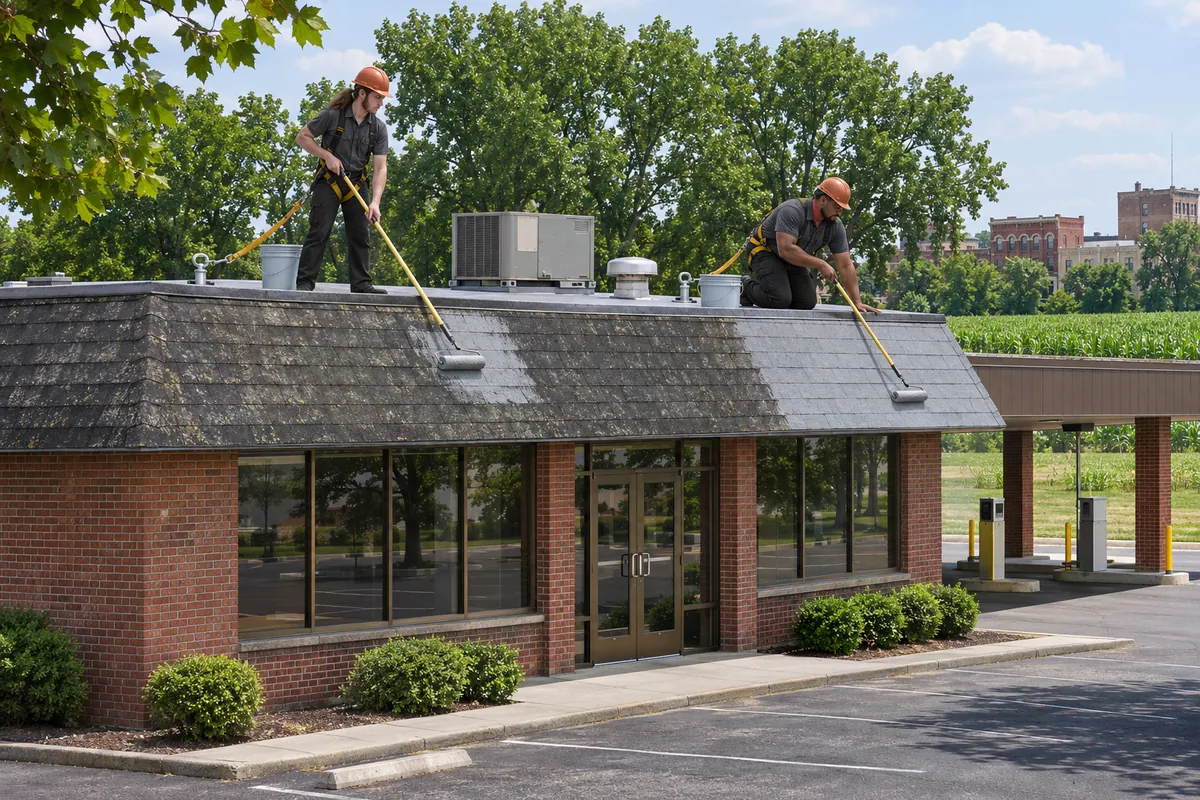
Shingle slopes on the same property take a shingle-grade coating rather than foam, which suits low-slope areas.
Shingle roof coatingWith its topcoat renewed on schedule, the foam itself holds up for a long time. The coating protects it from sun and weather, so hail punctures, foot traffic, and bird pecking need prompt repair to keep water away from the foam.
More metal roof coating answersWe clean the roof, repair punctures or exposed foam, and apply a new protective coat over the existing foam. Recoating is planned when film thickness readings show the coat wearing thin, which avoids removing and re-foaming the roof.
Pros: a continuous, lightweight layer that adds insulation and can be shaped to drain. Cons: it needs dry weather and mild temperatures, overspray must be controlled near cars and neighbors, and the topcoat needs upkeep.
Yes, when the panels are dry and fastened. Foam fills the ribs and covers every lap and screw, and the old steel stays in place as the base.
Thickness is set by the insulation you want and the slope needed to drain, so it varies across the roof. We probe depth as the crew sprays and apply the topcoat at the thickness its maker lists.
Yes, with care. Cured foam under its topcoat handles normal service traffic, and walk pads go down on routes to rooftop units. Sharp tools and dropped parts can puncture it, so those spots get repaired promptly.
Foam usually runs above a coating because it adds material, insulation, and slope. Foam depth, wet areas to remove, roof access, and the topcoat chosen set the price, which we list line by line after the inspection.
Send the roof size, the leak spots you know of, and how the building is heated. We check for moisture and price foam depth and topcoat.