
Acrylic Fits
- Pitch
- Enough slope to shed water
- After Rain
- Dry by the next morning
- Finish Today
- Faded paint or old acrylic
- Season
- Booked between spring and early fall
- Our Call
- Wash, prime, two coats
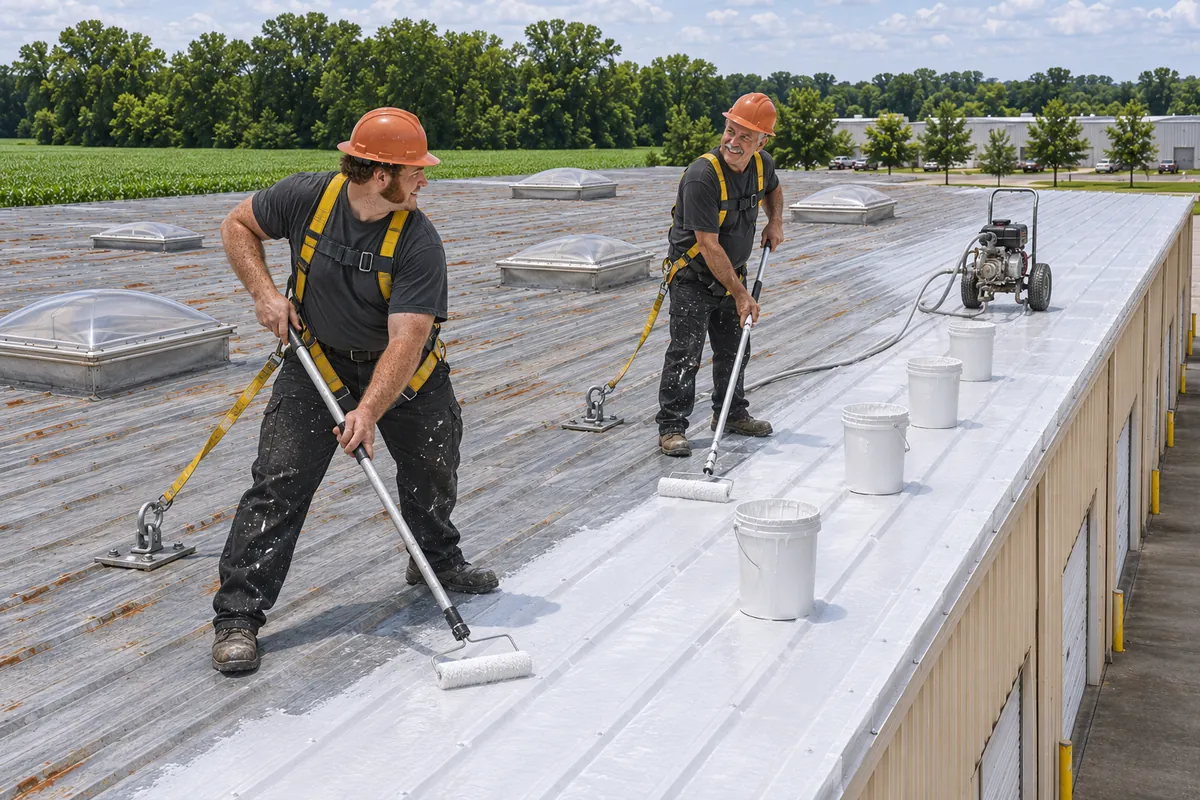
As a Terre Haute acrylic roof coating contractor, we wash, prime, and roll or spray water-based acrylic over sloped steel on shops, plants, and storage buildings.
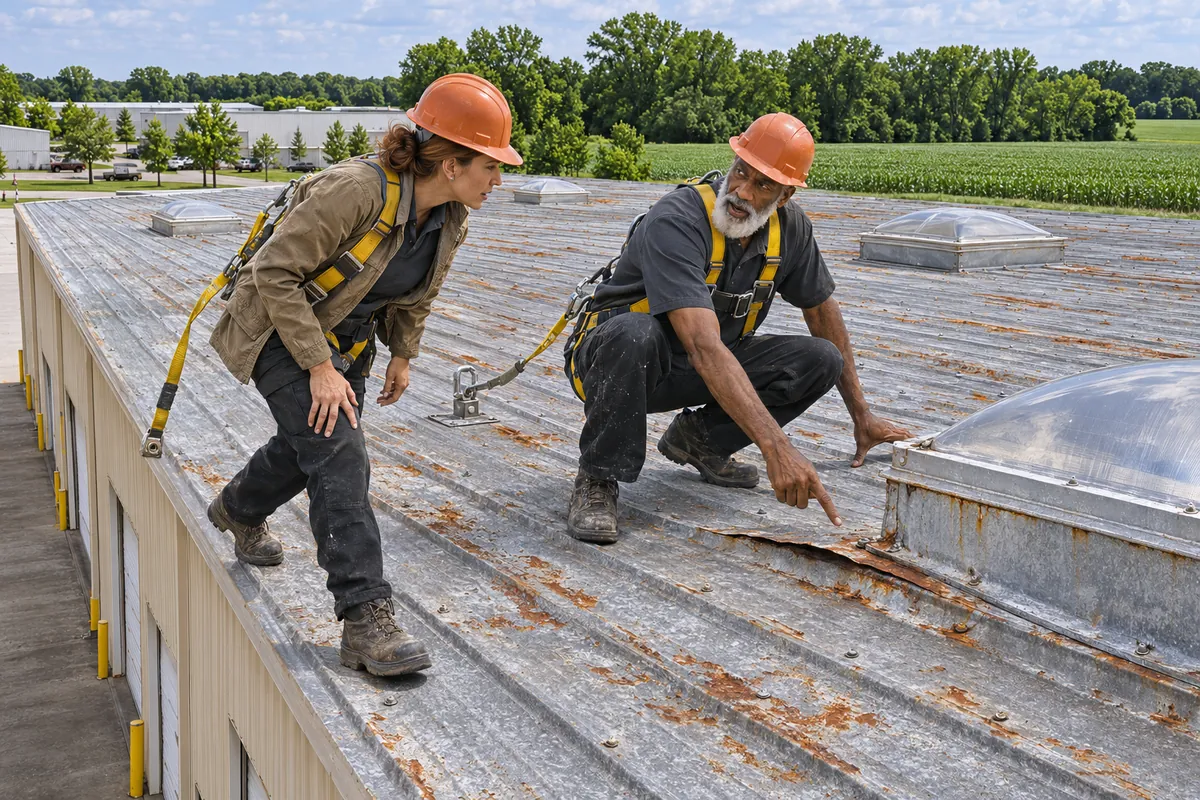
Terre Haute acrylic roof coating works best where rain runs off within hours. Compare your roof with both columns.
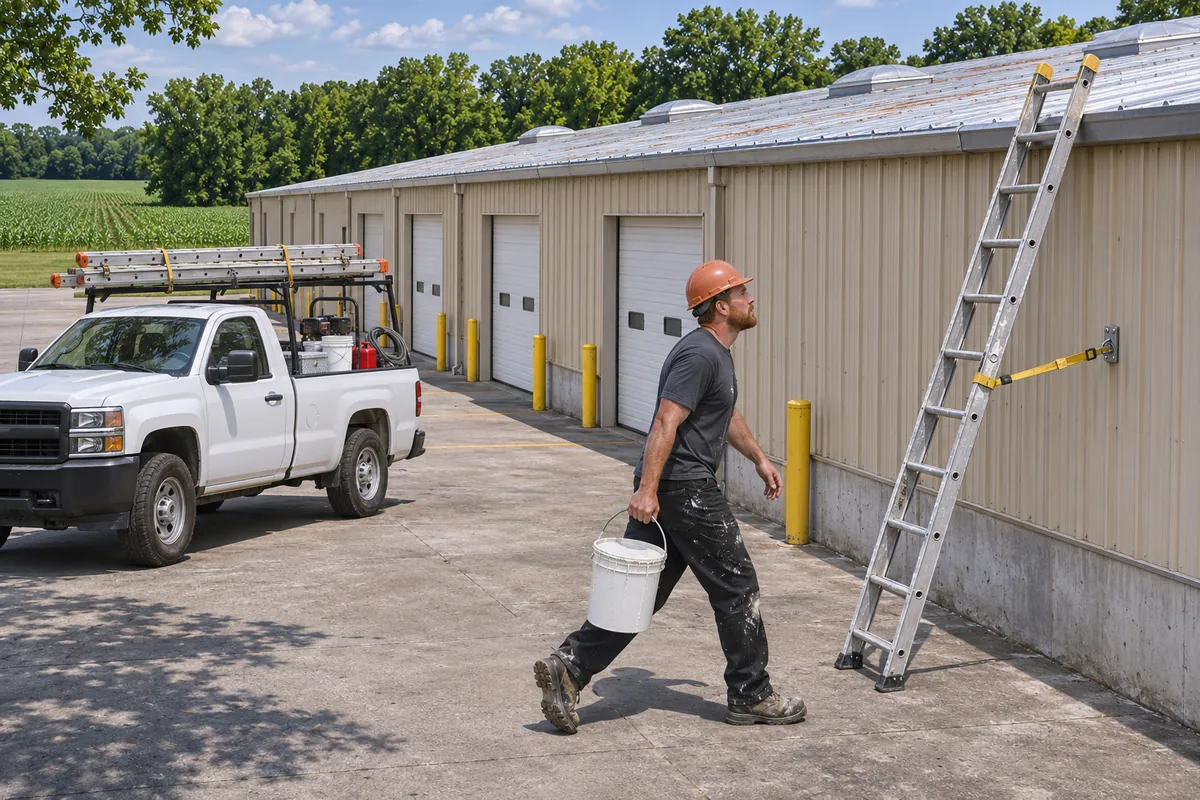
Acrylic is forgiving to apply, yet four roof conditions decide whether it lasts. We look at each before recommending it.
Standing water softens acrylic and loosens its bond, and it needs warm, dry days to cure, which narrows the season in west-central Indiana.
Factory paint turns powdery after years of sun; a wipe test shows how much chalk must be washed off so the primer bonds to steel.
Steel grows and shrinks between July afternoons and January nights, so laps get fabric under the acrylic to ride that movement.
Freezing dew on a fresh coat can wash it off, so application stops early on cool days and resumes once nights warm.
Acrylic is the lightest-duty of our five systems. The table shows where it fits beside the others on our roofs.
| System | Goes Over | Handles Ponding | Recoat With |
|---|---|---|---|
| Commercial Metal Roof Coating | Steel needing heavy rust and lap repair | Light, brief puddles | Same metal coating family |
| Silicone Roof Coating | Flat sections and aged membranes | Rated for ponding water | Silicone again later |
| Acrylic Roof Coating | Sloped metal that sheds water fast | Keep water moving off it | Acrylic over a washed film |
| Spray Foam Roofing | Decks that also need insulation | Built up to drain | Acrylic or silicone topcoat |
| Shingle Roof Coating | Flat-lying asphalt shingles | Sheds water on its slope | Shingle-grade acrylic |
Acrylic gives sloped metal roofs four practical gains, all tied to how the coating behaves and how it ages.
Acrylic stays whiter than silicone over the years, so the roof keeps reflecting summer sun off the panels.
Water-based product suits roofs over offices and break rooms, with intakes still covered while crews work nearby.
Per gallon, acrylic costs less than silicone, which helps on large sloped roofs that never hold water.
A cleaned acrylic film takes another acrylic coat well, so upkeep down the road stays simple.
Powdery paint is the stage where acrylic helps most. Call and we will wipe-test the panels and look for rust at the screws.
(930) 346-3203Acrylic depends on clean steel and the right weather. These five steps cover both, from the first walk to the second coat.
We check slope, drainage, chalk level, rust at ribs and screws, and every lap, then photograph low spots that might hold water.
A pressure wash with cleaner removes chalk, dirt, and mildew. The roof dries fully before anything else touches it.
Rusted areas get a rust-inhibitive primer; panels with heavy chalk get a bonding primer chosen to match the acrylic topcoat.
Laps, screw heads, curbs, and pipe boots get fabric set in acrylic so the movement points carry extra build.
Coats go on in contrasting colors, crosswise, so thin spots show. Each dries before the next, and wet mils are gauged throughout.
Acrylic covers sloped steel. These four systems handle the other roof types we see on the same properties.
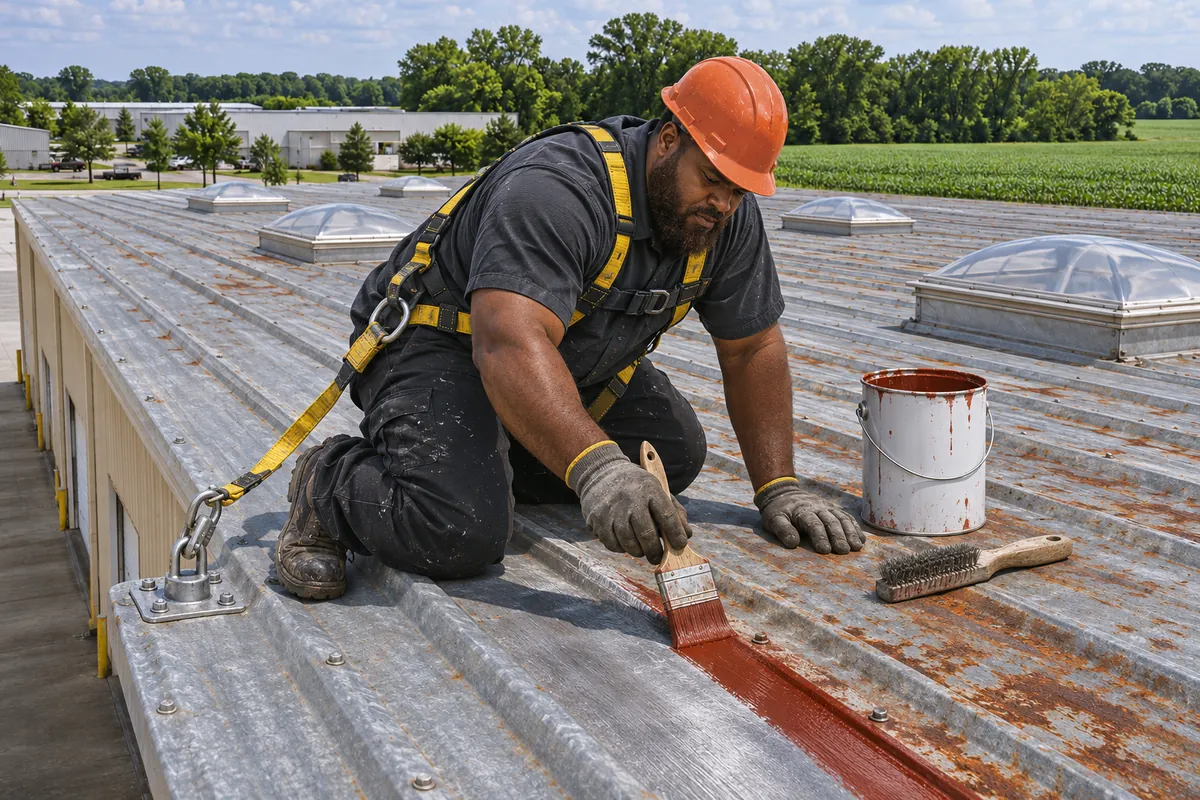
Steel with heavy scale, many stripped screws, or failing laps needs the full metal coating system before any topcoat goes on.
Metal roof coating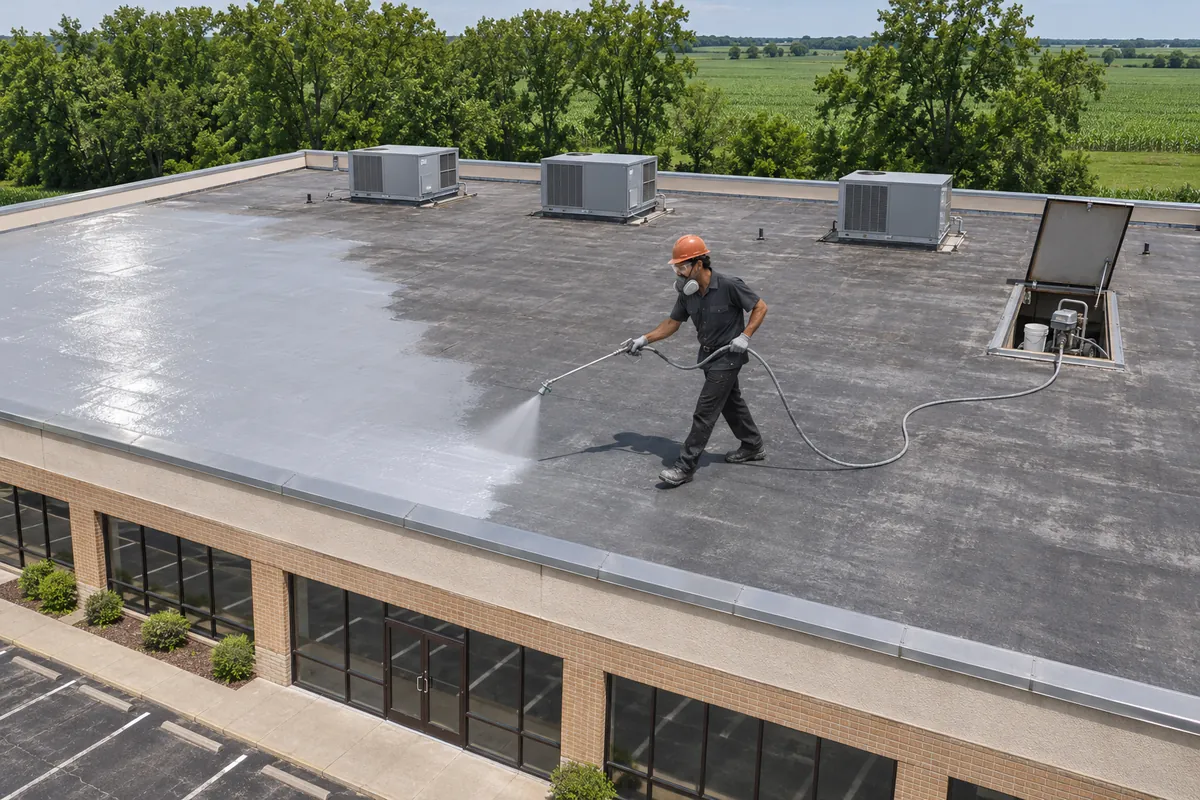
Flat wings off the main building that hold puddles after storms are better served by silicone than by acrylic.
Silicone roof coating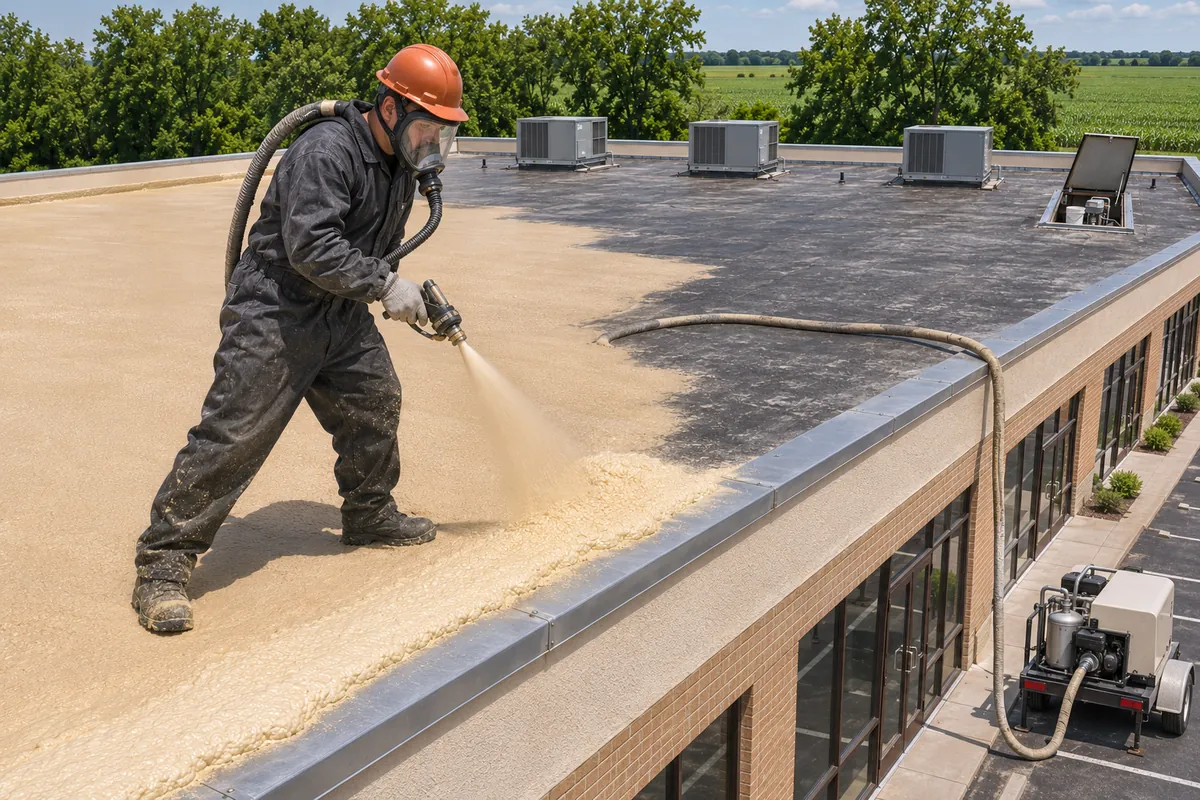
Shops that run heaters all winter can gain insulation from foam under the coating, along with continuous coverage of every lap.
Spray foam roofing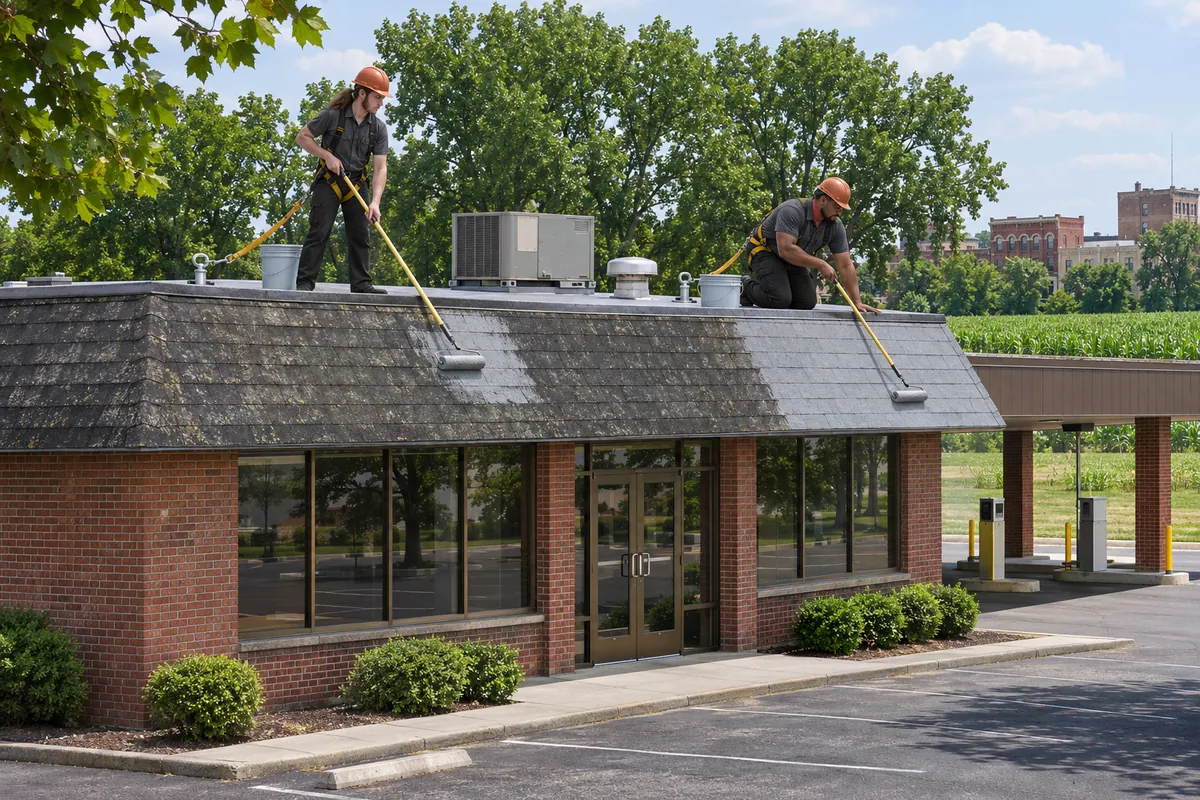
Office slopes with flat, attached shingles can take a shingle-grade acrylic while the crew is already on site.
Shingle roof coatingFilm thickness, surface prep, slope, and how fast water drains set its life. Steeper roofs that shed water get the most from acrylic, while low spots, foot traffic, and debris near units wear it sooner. A recoat at the right time extends it.
More metal roof coating answersUsually two or more, in contrasting colors so full coverage is easy to see. Total dry film thickness matters more than the count, and each coat must dry first, so humidity and temperature set the pace of the job.
Yes. Acrylic bonds to clean, primed panels and flexes as steel expands in summer and shrinks in winter. Rusted areas get primer first, and laps and screws get reinforcement before the field coats.
Spring through early fall, on dry days with temperatures above the product minimum and no rain or freezing dew expected before it cures. We check the forecast the evening before each coat.
Yes. It is water-based with a mild odor and cleans up with water. Intakes close to the work are still covered while the crew coats nearby.
No. Acrylic will peel off silicone. A silicone roof gets silicone for its recoat, and we confirm what is already up there with a quick test before quoting.
Coating falls in the calculator range of about $2.50 to $4 per square foot of roof. Heavy chalk, rust spots to prime, the number of laps and screws to reinforce, and lift access set where a roof lands within that range.
Acrylic over a rust-inhibitive primer keeps water and air off the steel, which slows rust where it started. Scale has to be brushed off first, because coating straight over loose rust traps moisture under the film.
Tell us the roof size, its slope, and whether water sits anywhere after rain. We check the chalk and rust and price a two-coat acrylic system.