
Silicone Fits
- Slope
- Flat to a gentle pitch
- Standing Water
- Puddles that last a day or two
- Surface
- Aged membrane, metal, or old coating
- Below The Deck
- Dry insulation on probe and core
- Our Call
- Prep, prime if needed, spray
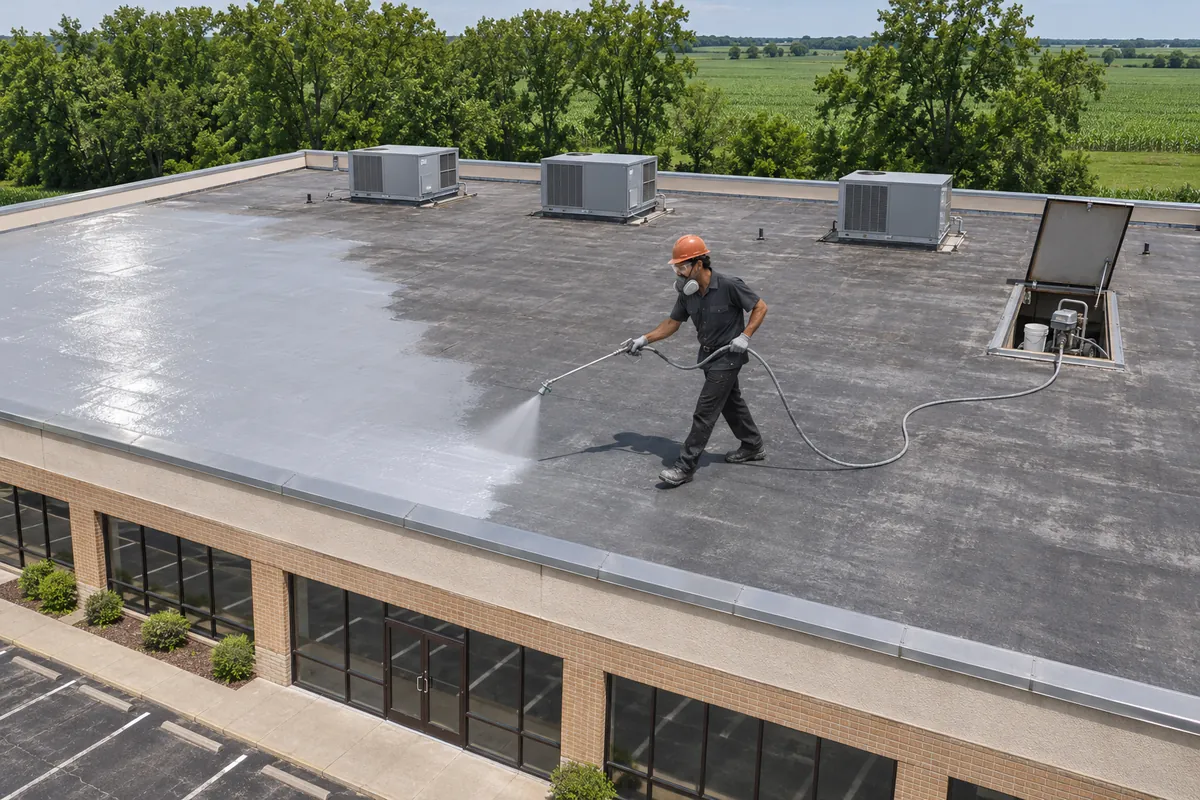
As a Terre Haute silicone roof coating contractor, we core wet spots, rebuild drains, test primers, and spray silicone over low-slope metal and aged membranes.
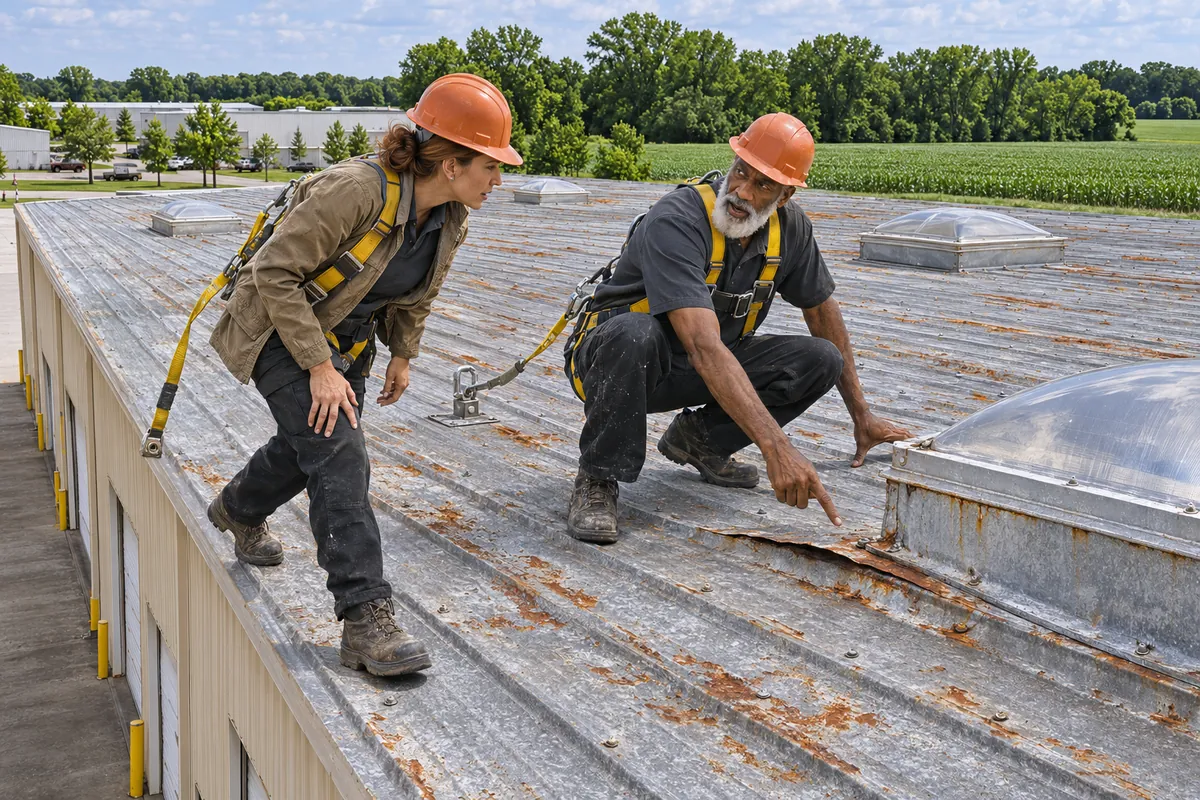
Terre Haute silicone roof coating suits flat and near-flat roofs that stay wet after storms. Check your roof against both cards.
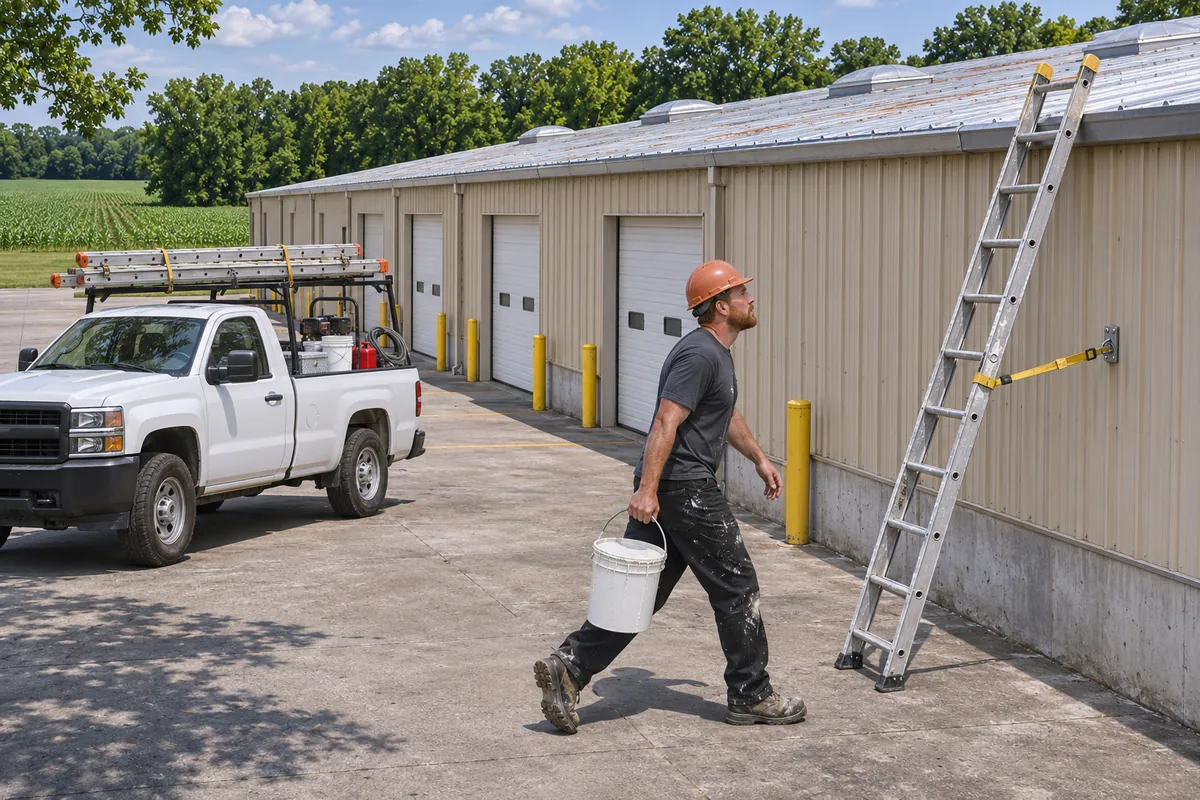
Low-slope roofs give clear signs before they leak. These four turn up most when we walk flat sections here.
Dirt circles near drains and midfield show where water stays after rain; silicone keeps its grip there when acrylic would soften.
Aged single-ply and modified bitumen open at laps first, so seams get cleaned, primed, and reinforced before the silicone pass.
Grit and leaves block drain bowls, and settled decks leave drains above the low spot; both get fixed so the coating is not left soaking.
Silicone holds dirt, which dulls the white over time, gets slick when wet, and accepts only silicone for later recoats, so plan walk pads and cleanings.
Silicone is one of five systems we apply. See how it compares on substrate, standing water, and the recoat path before choosing.
| System | Goes Over | Handles Ponding | Recoat With |
|---|---|---|---|
| Commercial Metal Roof Coating | Exposed-fastener steel with good slope | Water leaves within hours | Matching metal coating system |
| Silicone Roof Coating | Flat metal, single-ply, built-up, and old coatings | Stays bonded under puddles | More silicone over a cleaned film |
| Acrylic Roof Coating | Sloped panels that dry quickly | Fails where water sits | Acrylic over a washed surface |
| Spray Foam Roofing | Decks that need insulation and new slope | Tapered to move water to drains | Silicone topcoat over the foam |
| Shingle Roof Coating | Shingle slopes on office and retail wings | Not used on flat areas | Shingle-grade coating |
On low-slope roofs, silicone earns its place in four ways that owners notice within the first season.
The film stays bonded where water sits after storms, which is where other coatings break down first.
White silicone reflects summer sun off the deck, keeping rooftop units and the rooms under them a little cooler.
Coating over a dry, firm membrane avoids tear-off of the existing roof and the debris that comes with it.
Silicone skins within hours, so a passing shower after application usually leaves the fresh roof film unharmed.
Long-standing water wears every roof faster. Call us and we will check the drains, the deck, and whether silicone suits that section.
(930) 346-3203Silicone needs a clean, dry, tested surface. These five steps get it there and confirm the finished film.
A walk with a moisture meter maps wet spots, ponding rings, open seams, and drain heights, and core cuts confirm what the meter shows.
Soaked insulation and soft membrane are cut out and rebuilt flush, because coating over wet board traps the moisture inside the roof.
Pressure washing removes dirt and chalk. A small primer test patch cures for a few days to show whether the silicone bonds without it.
Seams, drain flanges, and curb flashing get fabric or sealant so the weak points carry extra material before the main pass.
Silicone goes on in one heavy pass or two, sized by dry film thickness rather than coat count, with wet mils checked across the field.
Buildings with flat and sloped sections often need two systems. These are the ones that pair with silicone most often.
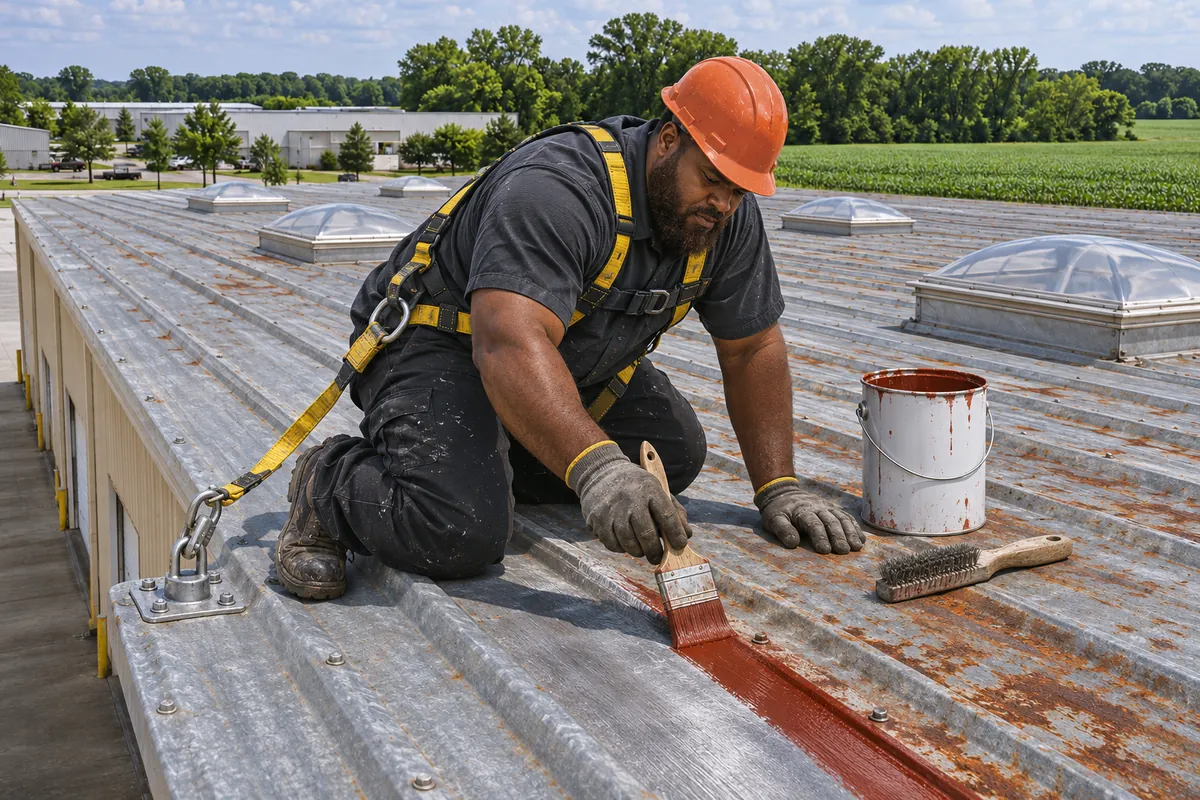
Sloped steel over the warehouse floor sheds water fast, so a metal coating system fits there while silicone covers the flat office wing.
Metal roof coating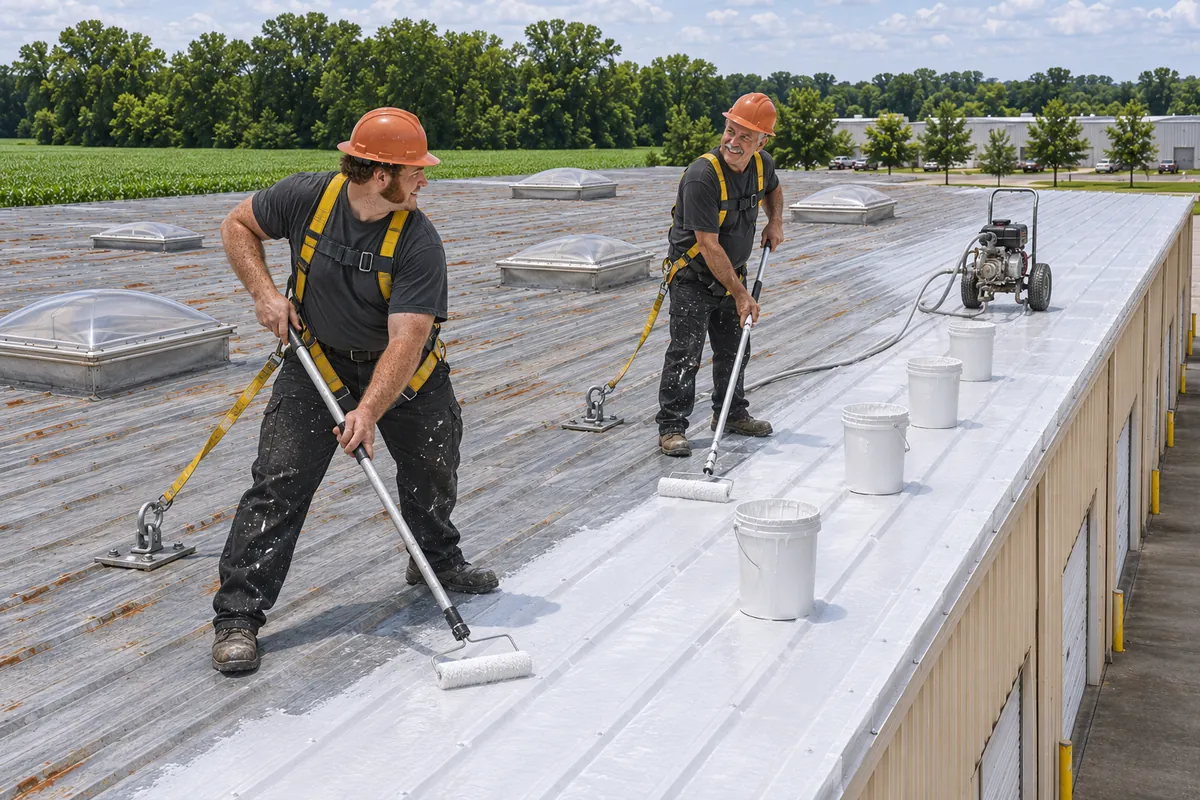
Lighter-duty sloped canopies and sheds can take acrylic, which costs less per gallon when standing water is never an issue.
Acrylic roof coating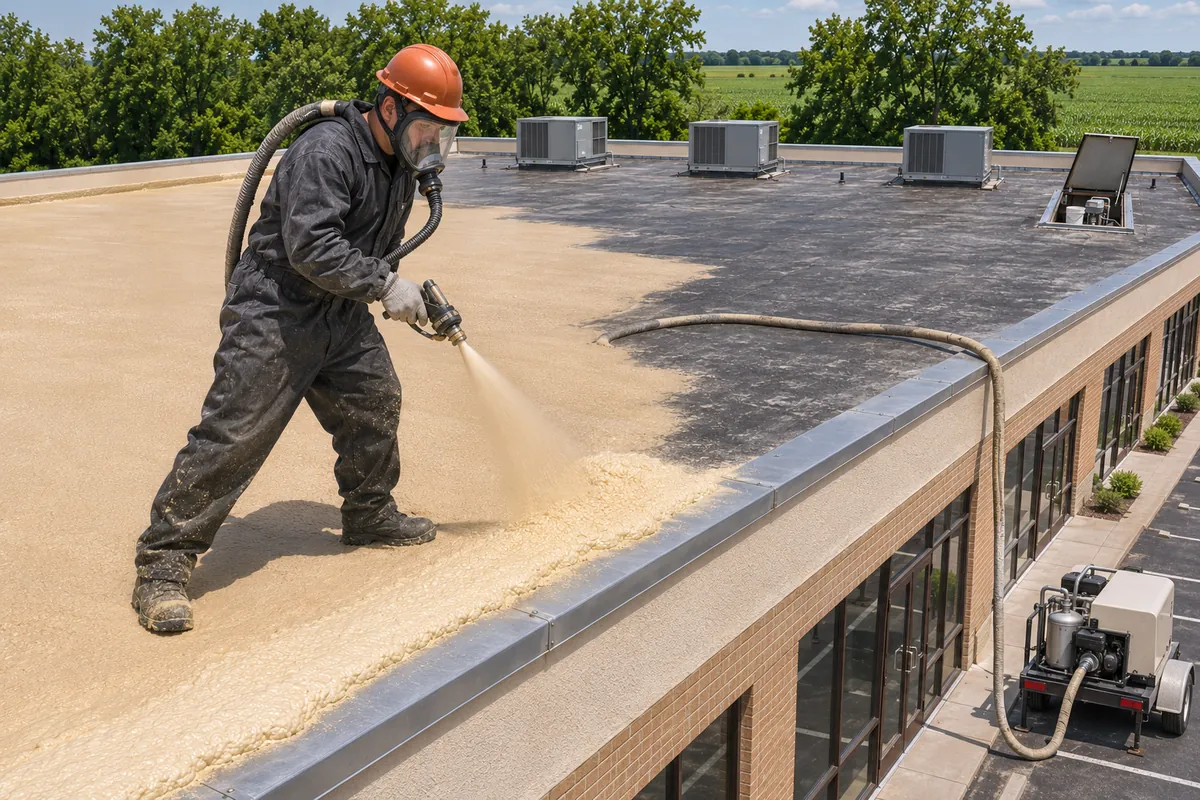
Flat decks that need more insulation or tapered slope get foam first, then a silicone topcoat over it.
Spray foam roofing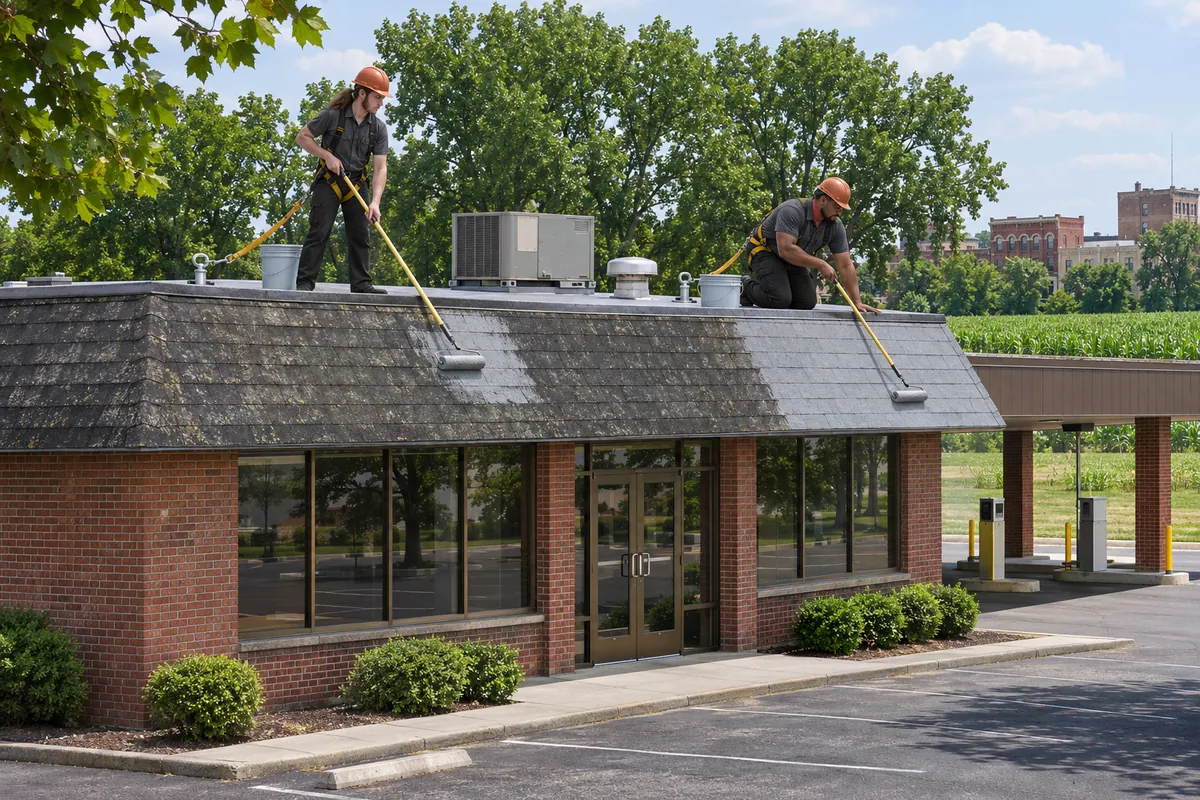
Retail fronts with shingle mansards can be coated in the same mobilization using a shingle-grade product.
Shingle roof coatingThat depends on applied thickness, surface prep, foot traffic, and debris. Hail, clogged drains, and damage around rooftop units shorten it. Periodic cleaning and a recoat with silicone at the end of its service life keep the roof sealed.
More metal roof coating answersMany systems go on in one or two coats, sized to the dry film thickness the maker specifies. Seams and fasteners get extra material first, and wet mils are measured across ribs, flats, and around units.
Silicone, in most cases. Flat sections hold water, and silicone stays bonded under it. Acrylic suits sloped roofs that drain quickly and costs less per gallon, so many buildings use both.
Yes, once the old film is cleaned, checked for adhesion, and primed where the test patch calls for it. Silicone over acrylic works; acrylic over silicone does the opposite and peels.
Most can. Intakes near the spray zone are shut off or covered while the crew works close by, then switched back on. Service techs are told which paths to avoid until the film sets.
Plan for walk pads on service routes because wet silicone is slick, a rinse every few years to restore brightness, and silicone for any future recoat.
The calculator range for coating runs about $2.50 to $4 per square foot of roof. Wet areas to cut out, drain rebuilds, seam reinforcement, and the film thickness the maker requires move a roof within that range after the inspection.
Send the square footage and photos of where water sits after rain. We core the wet spots, check the drains, and price the silicone system.